-1.jpeg)
Staff review
Saros
Sometimes forever is just a dream
8.5
Staff write-up
The Rev
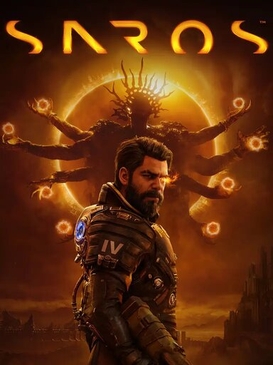
Housemarque essentially came out of nowhere a few years ago with Returnal, dropping one of the tightest, most excellent arcade-shooter experiences of the console generation. The mainstream criticisms claiming it was too repetitive or lacked a coherent story were largely unwarranted (and wholly off-base regarding the narrative), but the mechanical bones were virtually flawless. So, when Saros was announced, it immediately shot up to the top of my most anticipated games of 2026.
Now that the dust has settled and the credits have rolled, how does it actually stack up? It is a mixed bag, but it is a mixed bag filled with some incredibly shiny coins.
The positives. The combat is still bordering on perfection. The chaotic, arcade-like dashing and orb-hell frenzy that Housemarque is famous for is on full display here. The level design shares a similar DNA with Returnal (and I say it's got roots in the NES' Punch-Out!), but it is distinct, visually beautiful, and highly atmospheric.
However, the weapon variety is a bit lacking. Outside of two specific firearms, I simply did not find the arsenal all that interesting. I never quite figured out how to effectively utilize the ripsaw weapons, which felt like a massive downgrade so late in the game. But the moment you hand me a smart rifle or a repeater crossbow, I am happily on my way.
The new mechanics like the energy bubble, the parry system, and the ultimate weapons are fun. But the controls have some fatal flaws. Housemarque decided to map critical combat functions to partially depressing the shoulder buttons, essentially pressure sensitive firing with 3 stages of depression. This is a nightmare in a fast-paced bullet chaos. Far too often, I found myself accidentally misfiring my power attack instead of my secondary fire, or worse, completely unable to dash away from an enemy because my secondary fire required a highly precise amount of trigger pressure just to avoid triggering the wrong function. Tying split-second survival to the delicate feathering of a plastic trigger is a deeply flawed design choice.
Saros's biggest hurdle for casual players is that it outright refuses to tell you anything. Beyond the bare minimum basics, there is zero tutorialization. There are no on-screen prompts, aside from a few blue floating HUD elements that feel pointless and out of place. You have to figure out the world purely by exploring and dying.
This works for the game's structure. Saros is designed to be consumed in punchy, thirty-minute chunks. You drop in, push your luck, and cash out. Unlike Returnal, Housemarque implemented a much more permanent progression system this time around. You collect a currency called Lucenite and exchange it for permanent upgrades on a skill tree. You are effectively paywalled by each biome's major boss before you can progress, but once beaten, you can jump through any previous biome to grind levels or warp straight to the latest nightmare. It is a welcome change of pace that rewards different playstyles. My longest contiguous run was only an hour and fifteen minutes.
The story is where the massive divergence from Returnal happens, and not for the better. Returnal was incredibly deep, provided you were actually willing to work for it. You had to connect the dots to realize the horrific alien landscape was essentially a metaphor for life flashing before your eyes, childhood trauma, and the ultimate acceptance of grief. It remains one of the most satisfying narratives I have ever played. Saros, on the other hand, is frankly...bland. The surface-level plot follows a man named Arjun navigating a mutating, time-warped alien planet to find his wife, Nitia. That is basically it. Cutscenes are nearly non-existent, and the narrative heavy lifting is lazily dumped into standard video game audio logs and text files.
Spoilers: Eventually, the game reveals that Arjun is not exactly a hero. In fact, he is a raging, abusive alcoholic who has killed people, cheated on his wife, and is solely motivated by a toxic lust for power and absolution. Control. He ultimately succumbs to his own vile desires and transforms into the very thing he has been chasing: the King in Yellow. Ironically, this results in what is arguably the easiest boss fight in the entire game. This feels like a Dark Tower cyclical cycle of repetition that Arjun is doomed to repeat.
Nitpicking aside, I loved playing Saros, even if I did not care about the story. The mechanics are top-notch, the sound design is immersive, and the visuals are so fantastic that my PS5 actually started chugging during a few intense sequences on the shores.
Returnal gave me a story that felt like gourmet icing on a delicious cake. Saros gave me the same cake but with store-bought frosting. There is a brief mention of a "blue precipice" adjacent to the yellow shore that we never actually see (perhaps sequel bait, or an alternate ending I missed), so maybe there is more beneath the surface. But even with a weak narrative and some clunky trigger mechanics, Housemarque’s gameplay loop is so satisfying that I still loved every minute of it.
Future Brian here: there apparently is a second ending where Arjun rejects his desires, confronts his past, and finds Nitia who reveals she just needed to get away from him and his dreams to pursue her own. The game ends with police lights, hunting maybe this is all coping mechanisms in his head.
Future future Brian here: the second ending is more like a scavenger hunt of objectives you can quickly go through. Then simply beat the king again, but this time, walk away instead of punching him while he's down. Bing bang boom, second ending which is more satisfying but still open ended. What do the police lights mean at the end? I have ideas but it's left open ended enough to keep your creative juices flowing.
Same vibe
Related Revs

.jpeg)
Same desk

-1.jpeg)