Staff review
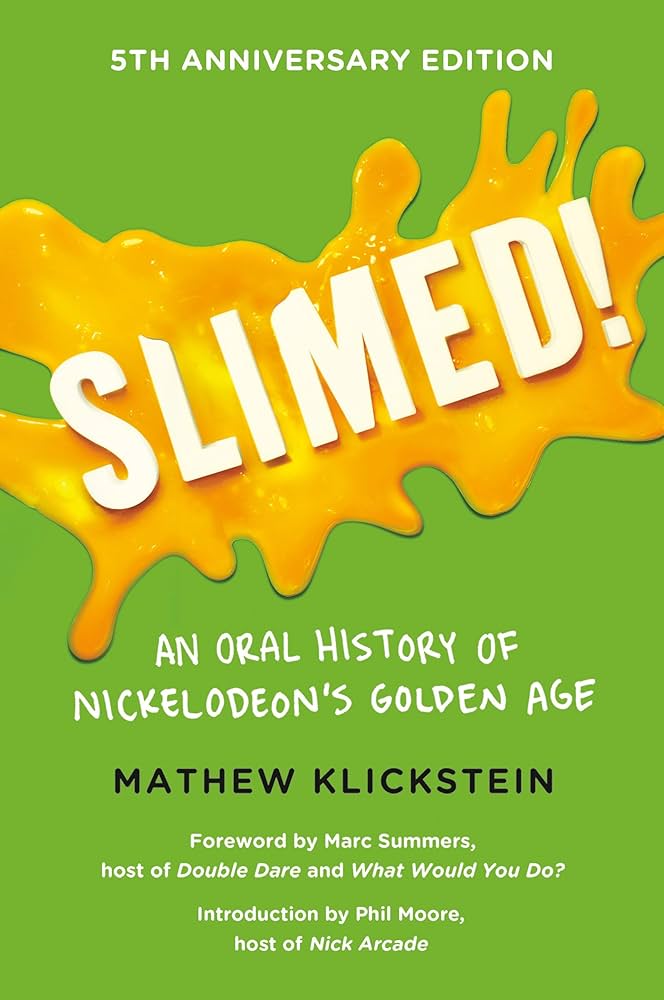
Slimed!: An Oral History of Nickelodeon's Golden Age
7
Staff write-up
The Rev
To preface, Marc Summers is a national treasure. Also, shoutouts to Toby Huss and Kirk Baily, RIP, for being real ones all these years.
Now that that's covered, let's discuss 90s Nickelodeon. It is possibly the greatest time ever to be a kid. TV made for you. Nothing compared, not even the Fox Kids animation block or TGIF. It's not nostalgia, it's a lack of quality that doesn't exist anymore. Chances are now shied away from in modern media. This was the last time in history the inmates were allowed to run the asylum, and the results speak for themselves.
The book opens with a quote from Marc remembering what his boss, Geraldine Laybourne, said when she was running the place: "Hire people who know what they're doing, and then let them do their jobs." None of this, it's my way or the highway, rigid systems that pegs must learn to fit into.
What we owe to this block of experimentation is impossible to quantify. The boundary-pushing of Ren & Stimpy directly led to SpongeBob SquarePants. Clarissa Explains It All and The Secret World of Alex Mack were feminists before feminism was marketable. Pete & Pete and Salute Your Shorts influenced Malcolm in the Middle, Parks and Rec, and countless others. Then you have game shows like Double Dare, GUTS, and Legends of the Hidden Temple that revolutionized how television approached game shows.
So learning how the hot dogs are made by stepping behind the scenes of these shows is fascinating. The accounts of how these kids attended school or got tutored on set is such a neat concept to sit with. The results of writing alum like Suzanne Collins, who would go on to write The Hunger Games was a writing staffer on Clarissa Explains It All, is crazy to think about. The future author of one of the bestselling YA franchises of all time was cutting her teeth on Nickelodeon. Ryan Gosling on Are You Afraid of the Dark. Nuts!
Kids were allowed to do things without the guardrails they have now, which is both a blessing and a curse. Minimal agents, little to no oversight, but the camaraderie led to bonds you still see today on the reunion circuit. Hey Dude has a podcast. Salute Your Shorts does reunion tours regularly. The Pete & Pete cast act like real-life brothers and best friends. It's cathartic to think these people weren't just clocking in at a job but building lifelong networks. It's also genuinely sweet to hear how Omar Gooding's mom was essentially the on-set mom for everyone she came in contact with.
The book itself is fairly poorly written, or rather poorly organized. It's just chunks of interviews vaguely tied to a topic. But the chaos suits the subject matter. If you're looking for a truly in-depth, well-organized, and thoughtful dissection of Nickelodeon, look up the Nick Knacks series by PopArena on YouTube. One thing that would have helped is a short blurb identifying who each interviewee was before each new voice gets introduced. I remember most names but it's been 30 years. A refresher wouldn't have killed them.
Learning the secrets of the slime recipe isn't anything new, but hearing everyone's opinions and mishaps with it was entertaining. Much like the slime taking iterations to perfect, you see how these actors got more comfortable in their roles, growing into them, making them their own, perfecting their craft. Again, the storytelling is all over the place though. We go from slime, to actors' personal experiences, to cigarette-smoking chickens being hidden on the Salute Your Shorts set. I suppose the connecting thread is how they pushed boundaries, but that's a generous read.
As someone who grew up on it, the section on how Nick Arcade technically worked was fascinating, but it's over before you know it. A lot of this book is like that. The tip of the iceberg while the bulk stays lurking under the water. We never quite pull back the full curtain.
The sections on diversity are eye-opening in that you never noticed it at the time, but looking back, these shows were genuinely inclusive without ever stating it outright. Not just race but religion, hair texture, gender, all represented across the lineup of shows. Some of the article phrasing is a tad suspect by today's standards, but the intention reads as sincere throughout.
The most in-depth section of the book covers the John Kricfalusi and Nickelodeon divorce. A whirlwind of events led to the creator and driving force behind Nick's biggest show, Ren & Stimpy, being let go for a near-infinite set of reasons. Even though this is the deepest portion of the book, it's still fairly brief, and I highly recommend Sick Little Monkeys by Thad Komorowski if you're really interested in the full chain of events. That book is exhaustive, detailed, and fairly neutral in its depiction of the entire feud. Bob Camp is an excellent and unique personality. If you ever get a chance to meet him, please do. Ask him about his time with Run-D.M.C. He's a great storyteller from my limited experiences with him.
Hearing what happened to the studio and the actors afterward is both satisfying and sad. How does a juggernaut like that get taken down by yes-men and number crunchers? The roots laid by these titans of the industry have spread and can be seen in the fingerprints of dozens of modern shows and movies. But everything now is so tame. So sanitized. So safe.
The kids themselves have varying levels of success since. Some continued in the business, some left voluntarily, others just never got much work again. But it all still feels like family 30 years later.
Same desk
-1.jpeg)