Staff write-up
The Rev
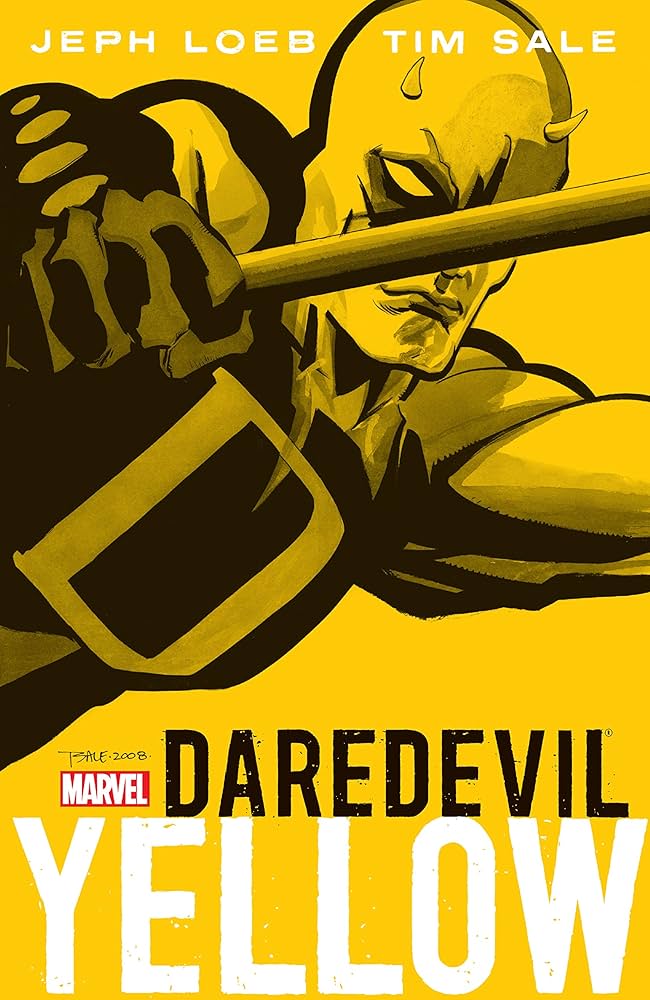
I've never read this one before and came in genuinely excited. The team of Jeph Loeb and Tim Sale, responsible for Batman: The Long Halloween, Batman: Dark Victory, Superman: For All Seasons, and their Marvel color series Spider-Man: Blue and Hulk: Gray, have built one of the most celebrated creative partnerships in comics history. A compelling and deep Daredevil arc felt like a safe bet.
The art is striking but carries a heavy debt to Frank Miller's Sin City aesthetic. Sale's thick blacks, heavy shadows, and expressionistic staging are undeniably gorgeous, though the influence sits close enough to the surface that it takes a few issues to feel like its own thing rather than a stylistic echo. But it does grow on you.
We open with Matt Murdock penning an open letter to Karen at the behest of Foggy, who believes writing it might help Matt finally come to grips with everything. We then flash back to get a proper look at how Matt's father, Boxer Jack Murdock, ended up in trouble with the mob for refusing to throw a fight. It's a genuinely good fleshing out of a character who usually gets reduced to a single plot beat. We understand where Matt's stubbornness, his determination, his refusal to stay down comes from.
The origin follows. The accident, the blindness, the heightened senses, the training. Then the reveal of the yellow and red suit in all its glory, Matt and Foggy setting up their law firm, Karen arriving as their assistant, their first clients being the Fantastic Four, and the early bonding of three people who have no idea what they're building together.
The yellow suit is made from his father's boxing robe. Adding to the depth that this isn't a fashion choice, it's grief stitched into Matt's life.
By issue three it becomes clear that the Netflix Daredevil series borrowed heavily from the themes, atmosphere, and specific story beats on display here. It practically reads like storyboards at points. The scene where Matt, Foggy, and Karen go out drinking to celebrate their first client, only for Matt to get ambushed by drunken thugs he beat at pool on the way home, lands with the same grounded, street-level energy that makes the show so effective.
The story moves quickly through some of DD's early villain encounters including the Owl and the Purple Man, but they aren't the point. This is a love story. A story about Karen Page specifically, told through Matt's eyes, filtered through grief he hasn't fully processed. It ends not with a climax or a traditional resolution but with the quiet acknowledgment that we already know where this goes. The joy is watching it begin.
SPOILERS: Karen Page's fate in the main Daredevil continuity, which the ending deliberately gestures toward without spelling out, is one of the more devastating long-form character arcs in Marvel history. Loeb and Sale are writing a love letter to a woman the reader already knows is gone.
It's a nice story. Relatively upbeat by Daredevil standards, which is admittedly a low bar. But the pain and grief sit just underneath the surface the entire time, informing every warm moment with the knowledge of what's coming.
Daredevil: Yellow stands as part of a body of work that genuinely reshaped how superhero comics could look and feel. Reading it now carries a weight it didn't have before, which feels appropriate for a book built entirely around grief and remembrance.
It won't be THE Daredevil story that defines our understanding of the character the way Miller's run does. It doesn't try to be. It's quieter than that, more personal, more interested in the warmth of a beginning than the brutality of an ending. For a first read going in cold it delivers exactly what the color in the title promises: something bittersweet, nostalgic, and genuinely moving.
Same vibe
Related Revs
-1.jpeg)
-1.jpeg)
.jpeg)
.jpeg)
Same desk
-1.jpeg)